Daily Routine Cards for Kids
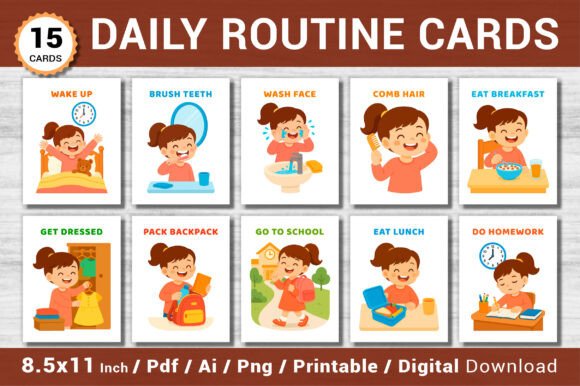
Help kids learn and follow their daily routines with this set of 15 printable Daily Routine Cards. Designed for parents, teachers, homeschoolers, and therapists, these simple and clear cards support independence, time management, and visual learning. Whether used as flashcards, visual schedules, routine charts, or classroom aids, they’re a versatile tool that can be printed, laminated, and reused daily.
The set includes an AI file that’s fully editable, a ready-to-print PDF, and 15 high-resolution PNG files. Each card features a clear image and a short, easy-to-read label. The visuals are designed to be engaging and age-appropriate, making it easier for children to understand and follow their routines.
These cards are ideal for preschoolers, toddlers, and kids with special needs. They help create structure and consistency, which is essential for developing good habits and a sense of responsibility. The cards can also be used in group settings, such as classrooms or therapy sessions, to teach social skills and encourage cooperation.
Visual Appeal and Design Features
The Daily Routine Cards have a clean, modern design that’s both functional and visually appealing. The layout is simple, with bold text and clear images that make it easy for children to recognize and understand each activity. The color palette is soft and soothing, helping to create a calm and organized environment.
The font used is a sans-serif typeface, which is ideal for readability and clarity. This choice makes the cards accessible to a wide range of users, including those with visual impairments or learning differences. The overall style is professional yet approachable, making it suitable for both home and educational environments.
The cards are also highly customizable. The AI file allows users to edit text, add images, or change the layout to suit specific needs. This flexibility makes the set a valuable resource for educators and parents who want to tailor the cards to their child’s unique requirements.
Applications Across Creative and Professional Projects
While the Daily Routine Cards are primarily designed for children, their visual style and structure can also be adapted for various creative and professional projects. For example, the clean layout and clear typography make them a great reference for editorial design, packaging design, or even web design.
Designers and marketers can use the cards as inspiration for creating visual schedules or infographics. The simplicity of the design ensures that the information is easy to digest, which is crucial for effective communication. In branding, the cards could serve as a model for developing a consistent visual identity that’s both functional and aesthetically pleasing.
For publishers and content creators, the cards offer a practical example of how to combine imagery and text to convey information clearly. This approach can be applied to other projects, such as instructional guides, lesson plans, or marketing materials. The cards also demonstrate the importance of visual hierarchy in design, showing how elements can be arranged to guide the viewer’s attention effectively.
Choosing the Right Font for Your Project
When selecting a font for your project, consider the purpose and audience. The Daily Routine Cards use a sans-serif font, which is ideal for readability and accessibility. This type of font works well in both digital and print formats, making it a versatile choice for a wide range of applications.
If you’re working on a logo design or brand identity project, a script or handwritten font might be more appropriate. These fonts add a personal touch and can help create a unique brand personality. However, they may not be as suitable for long blocks of text or small sizes, where clarity is essential.
For editorial design or packaging, a serif font could be a good option. Serifs can add a sense of tradition and elegance, making them ideal for publications, books, or luxury products. On the other hand, a modern typography style with geometric shapes might be better suited for tech-related projects or contemporary brands.
Font pairing is another important consideration. Combining a display font with a sans-serif or serif font can create a balanced and visually interesting design. It’s important to test different combinations to see what works best for your project. Always review the included styles and check for readability at different sizes and on different backgrounds.
Commercial Use and Licensing
The Daily Routine Cards come with commercial licensing, allowing users to incorporate the design into their own products or services. This makes them a valuable asset for small business owners, educators, and content creators who want to offer high-quality design assets to their clients.
When using the cards for commercial purposes, ensure that you comply with the licensing terms. This includes proper attribution if required and avoiding any unauthorized redistribution. Always review the license agreement carefully before using the files in a paid project.
For designers and developers, the cards can serve as a starting point for creating custom visual schedules or teaching tools. By understanding the principles behind the design, you can adapt and expand upon the concept to suit your specific needs. This approach not only saves time but also ensures that your final product maintains a high level of quality and consistency.