Pro Forma Balance Sheet Template
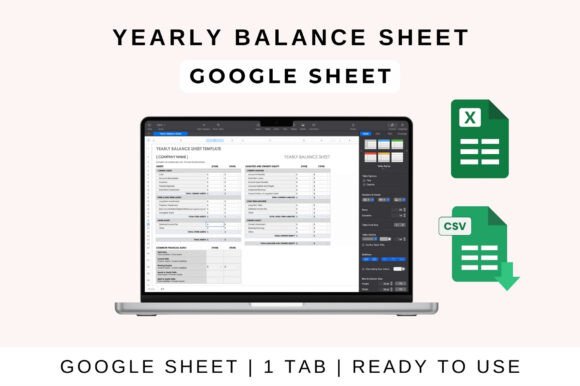
A Pro Forma Balance Sheet Template is a powerful tool that allows businesses to project their financial position at a future date. It provides a snapshot of a company’s assets, liabilities, and equity, helping entrepreneurs and managers make informed decisions about the future of their business. Whether you're launching a startup, seeking funding, or planning for growth, this template offers a structured way to visualize your financial health.
Unlike traditional balance sheets, which reflect past or current financial data, a pro forma balance sheet is forward-looking. It helps you anticipate potential financial scenarios by estimating what your company's balance sheet might look like under different conditions. This makes it an essential part of strategic planning and financial forecasting.
Real-World Applications of a Pro Forma Balance Sheet Template
Startups often use a Pro Forma Balance Sheet Template to present their financial projections to investors or lenders. By outlining expected assets, such as equipment or cash reserves, and anticipated liabilities, like loans or accounts payable, they can demonstrate their ability to manage finances effectively. This is especially important when applying for business loans or seeking venture capital.
Established businesses also benefit from using a Pro Forma Balance Sheet Template during internal reviews. For example, a retail company planning to expand into a new market might use the template to estimate the impact of new inventory purchases, additional staffing costs, and potential revenue streams. This helps them identify potential gaps in funding and adjust their strategies accordingly.
In the tech industry, startups frequently rely on pro forma balance sheets to support their business plans. Investors want to see how a company intends to allocate funds, manage debt, and grow equity. A well-structured Pro Forma Balance Sheet Template can provide clarity on these aspects, making it easier to secure funding or negotiate partnerships.
Who Benefits from Using a Pro Forma Balance Sheet Template?
The Pro Forma Balance Sheet Template is not limited to any single industry or business size. Entrepreneurs, small business owners, and corporate finance teams all find value in using it. For instance, a sole proprietor running a local bakery might use the template to track projected cash flow and determine when they need to take out a loan or reinvest profits.
Large corporations may use the template for more complex financial planning, such as evaluating the impact of mergers, acquisitions, or major capital investments. In these cases, the template helps ensure that all financial variables are considered before making significant decisions.
Nonprofits and charities also use Pro Forma Balance Sheet Templates to plan their budgets and forecast future funding needs. By projecting their assets and liabilities, they can better prepare for upcoming expenses and ensure they have enough resources to support their mission.
How to Use a Pro Forma Balance Sheet Template
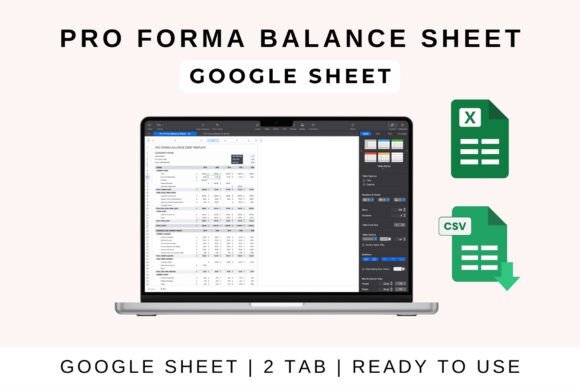
Using a Pro Forma Balance Sheet Template in Google Sheets is straightforward. Start by uploading the file to Google Drive and opening it in Google Sheets. From there, you can enter your projected income, expenses, and other financial data into the designated fields. The template will automatically calculate totals, ensuring that your balance sheet remains balanced.
Customization is another key advantage. You can adjust categories, formulas, and even the visual layout to match your specific needs. For example, if you run a consulting firm, you might add line items for client contracts, software subscriptions, or office space costs. This flexibility makes the template adaptable to a wide range of business models.
Collaboration is easy with Google Sheets. You can share the document with your team, allowing multiple people to contribute and update the data in real time. This is particularly useful for businesses with remote teams or those that require input from different departments.
If you prefer using Excel, the process is similar. Download the file, open it on your desktop, and enable editing if prompted. Excel versions often include advanced features like conditional formatting and data validation, which can enhance the accuracy and usability of your financial projections.
Considerations Before Using a Pro Forma Balance Sheet Template
Before diving into a Pro Forma Balance Sheet Template, it's important to understand the assumptions and data sources behind your projections. The accuracy of the template depends heavily on the quality of the inputs. If your estimates are too optimistic or pessimistic, the resulting balance sheet may not reflect realistic financial outcomes.
It's also wise to consider different scenarios. A single pro forma balance sheet shows one possible future, but businesses should explore multiple forecasts—such as best-case, worst-case, and most-likely scenarios—to gain a more comprehensive view of their financial position.
Another consideration is the time frame. Some templates are designed for short-term projections, while others can accommodate long-term planning. Choose a template that aligns with your business goals, whether you're forecasting for the next quarter or the next five years.
Strengths and Limitations of a Pro Forma Balance Sheet Template
The Pro Forma Balance Sheet Template is strong in its ability to organize and automate financial data. With built-in formulas, it reduces the risk of manual errors and ensures that your balance sheet remains balanced. This is especially beneficial for users who may not have extensive accounting experience.
However, it's important to recognize that the template is only as good as the data entered. If the inputs are incorrect or incomplete, the results will be unreliable. Additionally, while the template provides a structured format, it may not account for every unique aspect of your business. Customization may be necessary to address specific needs.
Despite these limitations, the Pro Forma Balance Sheet Template remains a valuable resource for businesses looking to plan, forecast, and communicate their financial health. Its ease of use, flexibility, and integration with tools like Google Sheets and Excel make it a practical choice for a wide range of users.